
What is an electric toothbrush and how does it work?
When you brush your teeth, you remove plaque, which damages teeth and can have health consequences. However, with muscle power alone, a conventional toothbrush can only loosen plaque slowly. An electric toothbrush ensures faster and more effective plaque removal through very rapid movements. Power is supplied by batteries or a rechargeable battery. Due to the required technology, the handle of an electric toothbrush is much thicker than a conventional toothbrush, and the brush itself is attached to the handpiece. Replace the brush attachment when the bristles are worn. Therefore, you do not discard the entire toothbrush, as with non-electric models, but only the brush.
What are the types of electric toothbrushes?
Oscillating-rotating toothbrushes
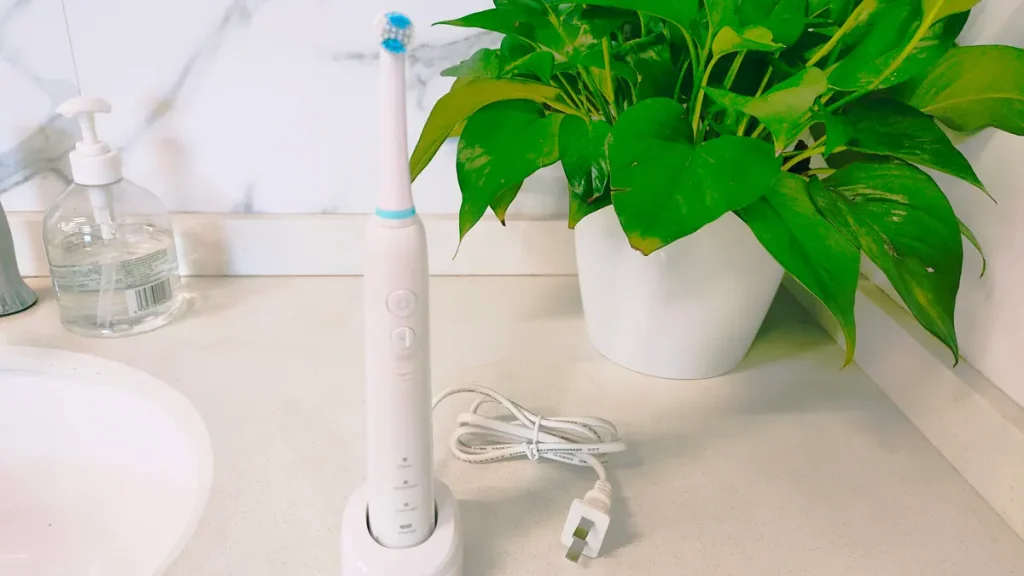
With round rotating toothbrushes, each tooth is brushed individually. In operation, the bristles oscillate rapidly back and forth; movements per minute can range from a few hundred to several tens of thousands, averaging about 9,000 movements per minute. At the same time, the brush rotates back and forth at angles of 50 to 70 degrees. Some oscillating-rotating toothbrushes combine this with additional pulsating movements. Plaque is reliably removed with this brushing method, but you must press the tooth with the brush, which can damage the enamel. This can be remedied by optical brushing pressure control.
Sonic toothbrushes
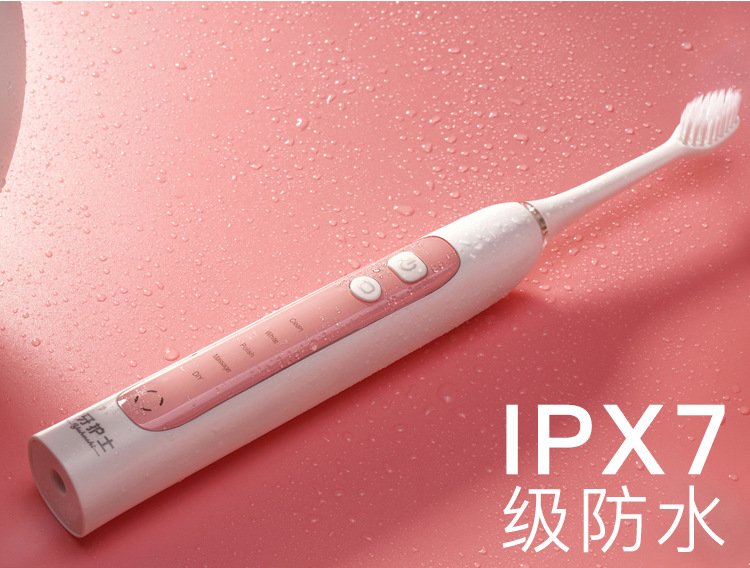
In sonic toothbrushes, the brush head is not round but resembles a manual toothbrush. It does not rotate but vibrates. This results in tens of thousands of vibratory movements per minute, with so-called “ultrasonic toothbrushes” having significantly more, but these remain quite rare. The sonic toothbrush does not require much pressure to loosen plaque and is therefore gentler on tooth enamel. The cleaning effect of sonic toothbrushes is often better than that of oscillating-rotating toothbrushes, but the differences are not too large. Sonic toothbrushes are usually more expensive, and this also applies to additional brush attachments.
What should I look for when buying an electric toothbrush?
Cleaning method
When it comes to electric toothbrushes, you can choose between models with oscillating-rotating brush heads or vibrating sonic toothbrushes. In both categories, there are top models with good dental cleaning. As a rule, sonic technology is more effective and gentler, but the models and corresponding replacement brushes are more expensive. Brushing teeth works differently with both methods and also feels different. There is no clear recommendation.
Pressure control and brushing time signal
Many electric toothbrushes have a timer that supports tooth brushing with acoustic signals. This gives you indications of how long you should clean the individual quadrants of your dentition, and a tone tells you when you have finished brushing. The brushing time signal is now part of the basic equipment, even in most budget models. Still, you should ensure that the sound signals are easily audible and understandable. Pressure control also emits acoustic or visual signals and thus warns you if you press too hard on the tooth enamel. Only some models have visual pressure control, mostly the more expensive ones.
Programs and functions
In addition to normal tooth cleaning, electric toothbrushes offer a different selection of alternative and additional programs. For example, there are settings for gentle cleaning of sensitive teeth, while teeth can be polished to a high gloss in the teeth whitening program. Additionally, variations of gum massage and care programs are offered. It is mainly the more expensive models that offer three to five settings. Plaque removal is offered with every toothbrush, but if you have special requirements, a comparison is worthwhile.
Charging and battery accessories
Most newer models of electric toothbrushes operate with a non-replaceable battery; only occasionally will you find devices that run on batteries. The latter are somewhat more flexible, and you can use rechargeable batteries instead of disposable ones. However, since wear is relatively low even with permanently installed rechargeable batteries, there is hardly any difference in lifespan. The motor is more likely to fail, and you will have to replace the entire unit anyway. However, what you should pay attention to with battery models is the charging method. This ranges from a normal power plug to a USB interface, which is especially practical for travel, to wireless inductive charging.
Storage
Incluso si usa el cepillo de dientes eléctrico todos los días, el almacenamiento práctico es un punto importante. Los dispositivos recargables generalmente vienen con una estación de carga, en la que se conecta la pieza de mano para cargarla entre usos. A menudo hay ranuras en la estación de carga para almacenar dos o más accesorios de cepillo, pero no siempre. Para viajes o almacenamiento prolongado, también se puede incluir un estuche a juego para guardar la pieza de mano y los cepillos. Además, algunos modelos tienen un bloqueo de viaje para que el cepillo de dientes no responda accidentalmente al presionar un botón mientras está en su bolsillo. El volumen de suministro varía enormemente.
Piezas de repuesto
El accesorio de cepillo del cepillo de dientes eléctrico debe cambiarse periódicamente. Por un lado, la suciedad y las bacterias se acumulan y, por otro, las cerdas se desgastan. Todos los fabricantes de cepillos de dientes eléctricos ofrecen accesorios de repuesto adecuados, pero el precio varía mucho: por accesorio de cepillo se paga entre menos de 2 euros y más de 10 euros. Entonces, además del costo de compra del dispositivo, están los costos de funcionamiento. Si compra las escobillas de repuesto en paquetes de cantidades más grandes, generalmente es más barato. Las piezas de repuesto, como las estaciones de carga o los cables de alimentación, suelen estar disponibles en cantidades limitadas. Por lo general, la batería no se puede reemplazar de todos modos, y si el motor está defectuoso, casi nunca vale la pena repararlo porque puede obtener un dispositivo nuevo por el mismo dinero.
¿A qué debo prestar atención al cepillarme los dientes?
Los expertos aconsejan cepillarse los dientes después de cada comida, pero muy pocas personas lo hacen. La mayoría de los alemanes se cepillan los dientes dos veces al día, por la mañana y por la noche. Esto es suficiente, pero el mínimo absoluto. Cuando se trata de cepillar, se trata de la técnica correcta. Esto varía según el método utilizado: con los cepillos de dientes convencionales, debe usar movimientos de agitación para aflojar la placa y luego cepillar desde las encías hasta la corona del diente. Con un cepillo de dientes eléctrico giratorio, esto funciona de manera más eficaz y completa. Coloque el cepillo redondo en la línea de las encías y muévalo a lo largo de la línea de las encías para limpiar cada diente individualmente. El cepillo de dientes sónico no gira, pero afloja la placa a través de la vibración. Por lo tanto, coloque el cabezal del cepillo en un ángulo de 45 grados en la línea de las encías y raspe la suciedad hacia abajo.
Independientemente del método, sin embargo, siempre debe prestar atención a la presión. Si presiona el cepillo con demasiada fuerza, puede dañar sus dientes y encías. Por lo tanto, algunos cepillos de dientes eléctricos tienen un control de presión visual que advierte si está frotando demasiado. De lo contrario, debe tener cuidado de no exagerar. El cepillo de dientes sónico afloja la placa con sus vibraciones incluso a baja presión, pero incluso la cabeza redonda oscilante y giratoria solo tiene que asentarse con las puntas de las cerdas en el diente. En general, es útil una secuencia de cepillado fija, en la que se limpia la parte delantera y luego la trasera, por ejemplo, para no olvidar ningún diente.
¿Qué más forma parte de la higiene bucal?
The electric toothbrush cleans more effectively than the conventional toothbrush, but still only cleans the surface of the tooth. Whichever way you choose to brush your teeth, the interdental spaces need extra attention. You cannot do without regular use of dental floss or interdental brushes. For additional oral hygiene, you can also use an oral irrigator. This can be used to clean hard-to-reach areas of the mouth. You can learn more about this in our mouthwash buying guide. For the full effect, you should also clean your tongue separately.
Pero incluso si limpia a fondo en todos los lugares accesibles de la dentición, siempre quedan pequeños residuos. Así que la limpieza dental profesional tiene un beneficio. Para una salud dental perfecta, los expertos recomiendan el procedimiento dos veces al año. La limpieza dental realizada por profesionales elimina la placa rebelde y limpia a fondo los espacios interdentales. Además, los dientes se pulen para que las bacterias no se arraiguen y se tratan con gel de flúor, que restaura los minerales en la superficie del diente. Algunas aseguradoras de salud cubren al menos parte del costo de la limpieza de dientes, pero por lo general usted tiene que echar mano de su propio bolsillo.
Como fabricante, fábrica y proveedor de cepillos de dientes eléctricos en China, Shenzhen Relish ofrece varios tipos de cepillos de dientes eléctricos al por mayor, dropshipping y servicios OEM. Al mismo tiempo, también somos fabricante de irrigador bucal, proporcionando venta al por mayor, venta directa y servicios OEM/ODM para irrigador bucal. Esperamos poder trabajar con usted.